Manufacturing & Logistics
Unolabs builds the high-fidelity digital twins and operational lakehouses required for autonomous manufacturing. We connect plant, MES, ERP, and sensor data into a single engineering system that optimises OEE, asset health, and supplier risk in real-time.
For discrete manufacturing leaders, automotive components, industrial products, and global logistics networks.
Engineering specialised data zones and autonomous processing layers for Manufacturing & Logistics leaders.
You know your OEE. You don't trust the number.
Every plant computes availability, performance, and quality a little differently, so the corporate OEE roll-up starts an argument instead of a decision. Unplanned downtime is costed per hour, yet the MES, the historian, and SAP each tell a different story about the same stoppage — and tier-2 supplier exposure never makes it into the view at all. We build the ISA-95-aligned contextualisation layer that makes one number stand.
Architectural Bottlenecks Hindering Manufacturing & Logistics Transformation
Systemic OT/IT Fragmentation: Plant-floor MES, IoT, and ERP data sit in disconnected silos with inconsistent grains and no shared ISA-95 context hierarchy, preventing real-time operational visibility.
Disconnected Value Chains: Operations teams cannot trace asset health, unplanned downtime cost per hour, and tier-2 supplier exposure in a single engineering view.
Governance Gaps in Telemetry: Sensor-driven predictive maintenance and OEE programmes fail when high-frequency telemetry data is not governed and contextualised.
Relevant patterns from industry work
Each pattern represents a validated technical outcome delivered for global enterprise clients.
Digital Twin for Scope 3 Traceability
Developed a verifiable sustainability twin for a major manufacturer, tracking Scope 3 emissions across a tiered supplier base, with the provenance of each figure recorded rather than assumed.
Agentic Predictive Maintenance
Implemented autonomous agents that diagnose asset faults and trigger work orders in SAP without human intervention, closing the gap between fault detection and work order at an automotive plant.
Read Technical ProofConnected Vehicle Data Platform
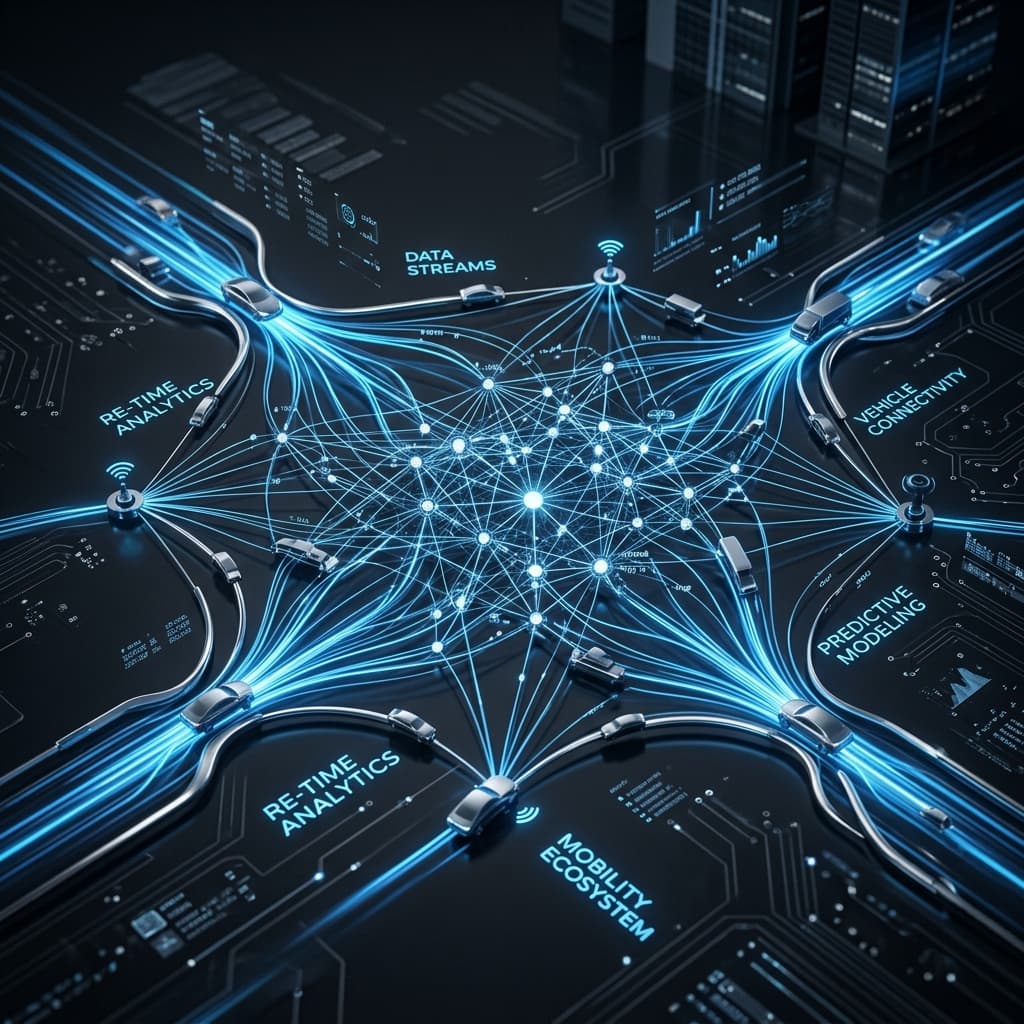
Modernised a global automotive leader's data foundation with a multi-domain platform and golden records, powering real-time connected vehicle analytics.
Read Technical ProofManufacturing & Logistics Operational Flow
ERP, MES, WMS, IoT, suppliers
Production, inventory, shipment, quality, asset, supplier, and sensor events enter from plant and logistics systems.
Operational lakehouse
Events are standardised by asset, plant, product, order, supplier, location, and time with quality and lineage controls.
OEE, risk, maintenance, movement
Operational features power downtime analytics, predictive maintenance, supplier risk, inventory visibility, and logistics exception detection.
Plant, logistics, procurement, finance
Teams receive dashboards, alerts, forecasts, and workflows for throughput, service, and cost decisions.
Diagnostic view of the Manufacturing & Logistics data stack
This blueprint details the specialised processing zones, control points, and delivery channels specific to the Manufacturing & Logistics landscape.
Expert insights for Manufacturing & Logistics
Enterprise migration and production operating model stories.
Industry Transformation Outcomes
Real-Time Operational Visibility
Predictive Maintenance Maturity
Resilient Supply Chain Orchestration
Engineering Manufacturing & Logistics Ecosystems
How our 2026 service catalogue integrates to solve high-growth industry challenges.
Real-Time Streaming & Event Architecture
Perishable signal test
Stream only the signals that lose value in hours, so latency spend is tied to a decision rather than to an estate-wide default.
“Real-time is approved at one plant as a pilot and inherited by twelve as a standard, and the run cost lands long after the business case that justified it closed.”
Latency decision log
Each telemetry flow recorded against the decision it feeds and the latency that decision needs, marked stream or batch, with retention and downsampling agreed before volume sets the cost.
Streaming is a standing commitment that outlives its business case: telemetry accrues whether anyone queries it, and retention hardens the longer it sits.
DQ Sentinel
Silent tag decay
Baseline every historian tag and MES feed, so a stream that quietly stops updating raises an incident before it reaches a reported number.
Data Engineering & Integration
One-way OT path
Build the outbound-only path from plant systems to governed products, so analytics scales across sites without opening the plant network.
“Every plant has its own change board, its own integrator and its own reason why it is the exception, so one integration pattern costs six weeks per site instead of once.”
Plant onboarding pack
One reviewed integration pattern - outbound only, agreed tag scope, named OT security sign-off - reused site by site, so the second plant is a scheduled change and not a fresh negotiation.
Values leaving a historian carry its compression and dead-band settings, so a site can meet the pattern and still report on a different basis to its neighbour.
Data Architecture
ISA-95 context layer
Reconcile MES, historian and ERP onto one ISA-95 hierarchy, so a plant comparison survives challenge instead of restarting the definition.
“The board asks why availability moved, three systems return three defensible answers, and a capital decision waits on a data argument nobody is empowered to settle.”
Single OEE definition
One written definition of availability, performance and quality, the ISA-95 path each system maps to, and the named owner who answers for the number when two plants disagree.
Downtime reason codes have gone unowned since commissioning, so a shared definition still inherits a taxonomy that routes disagreement into an Other bucket.
Enterprise Data Platform Engineering
Telemetry retention tiers
Hold high-frequency telemetry on retention tiers agreed up front, so platform cost stops tracking the asset estate one for one.
Enterprise Decision Intelligence & Operational Analytics
Tier-2 exposure trace
Trace part genealogy through tier-1 declarations to the sub-tier sites a programme depends on, and mark where the chain is inference.
SAP Data Integration & Orchestration
PM notification link
Migrate orchestration off retiring SAP Data Intelligence, keeping each MES stoppage tied to its SAP PM notification through the move.
DevOps & SRE
Changeover window release
Release edge and plant-floor change inside changeover and shutdown windows, so platform cadence never buys itself an unplanned stop.
Start Your Manufacturing & Logistics Modernisation
We'll review your current architecture, identify immediate bottlenecks, and draft a production-grade roadmap for your autonomous transformation.
"Bring the downtime event your teams still argue about. We'll trace it end to end."