Insights &
Architectures.
Long-form engineering insights, case studies, and deep-dives into the future of autonomous data infrastructure.
Showing 42 of 42 insights
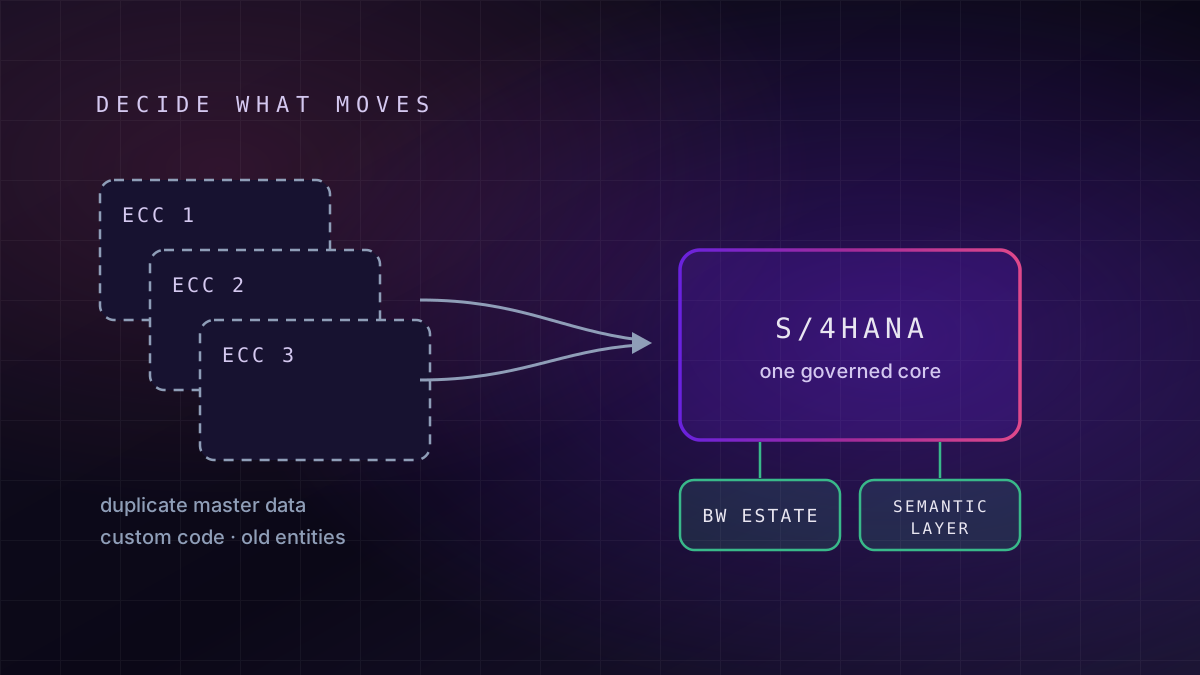
SAP S/4HANA Is Not a Migration Project. It's a Data Architecture Decision.
S/4HANA overruns when treated as a move. Why consolidation, the BW estate and the semantic layer decide the outcome, plus three questions to ask first.
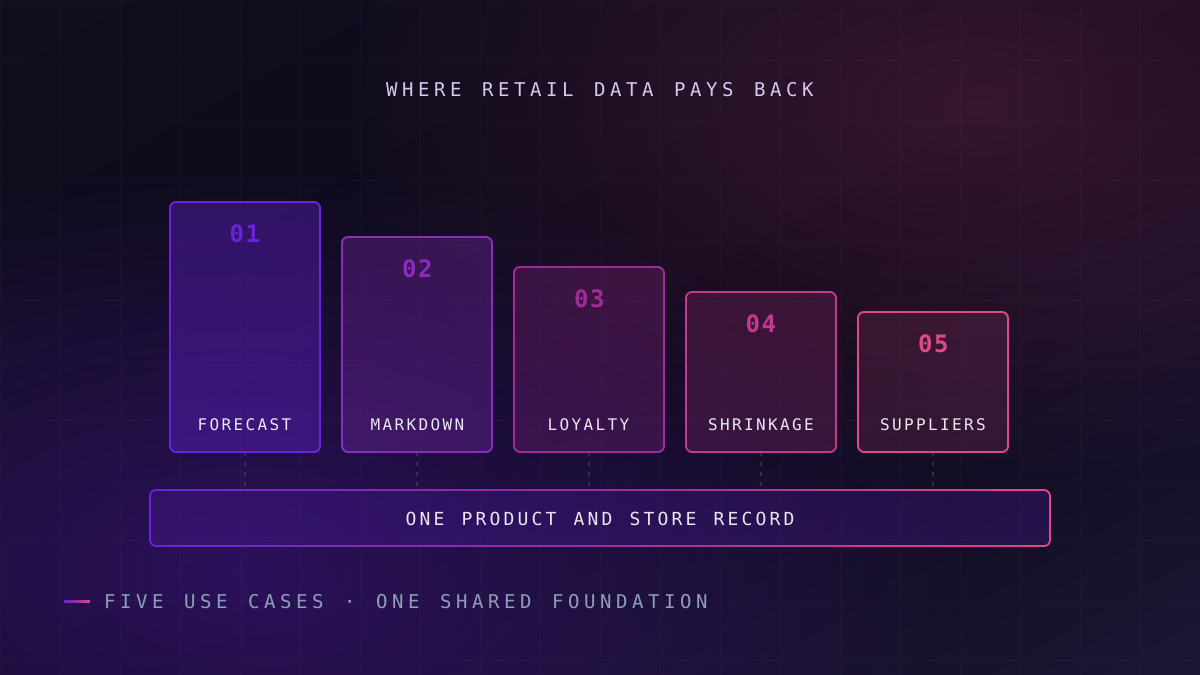
Big Data Analytics in Retail: The Five Use Cases That Pay Back, and What Each One Needs First
Big data analytics in retail pays back in five places. What each use case needs, where it stops paying off, and the platform UK retailers build first.
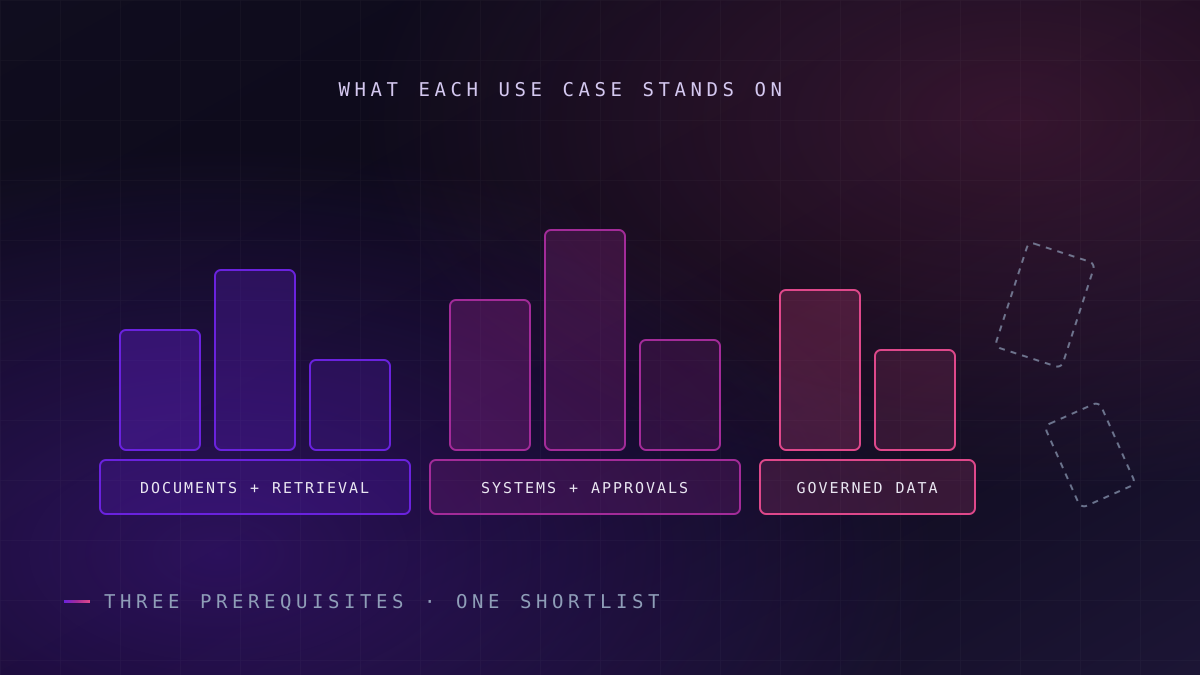
Enterprise Generative AI Use Cases That Reach Production, Grouped by What Each One Needs
Enterprise generative AI use cases grouped by what each needs to reach production, where each one fails, and its likely EU AI Act risk tier.
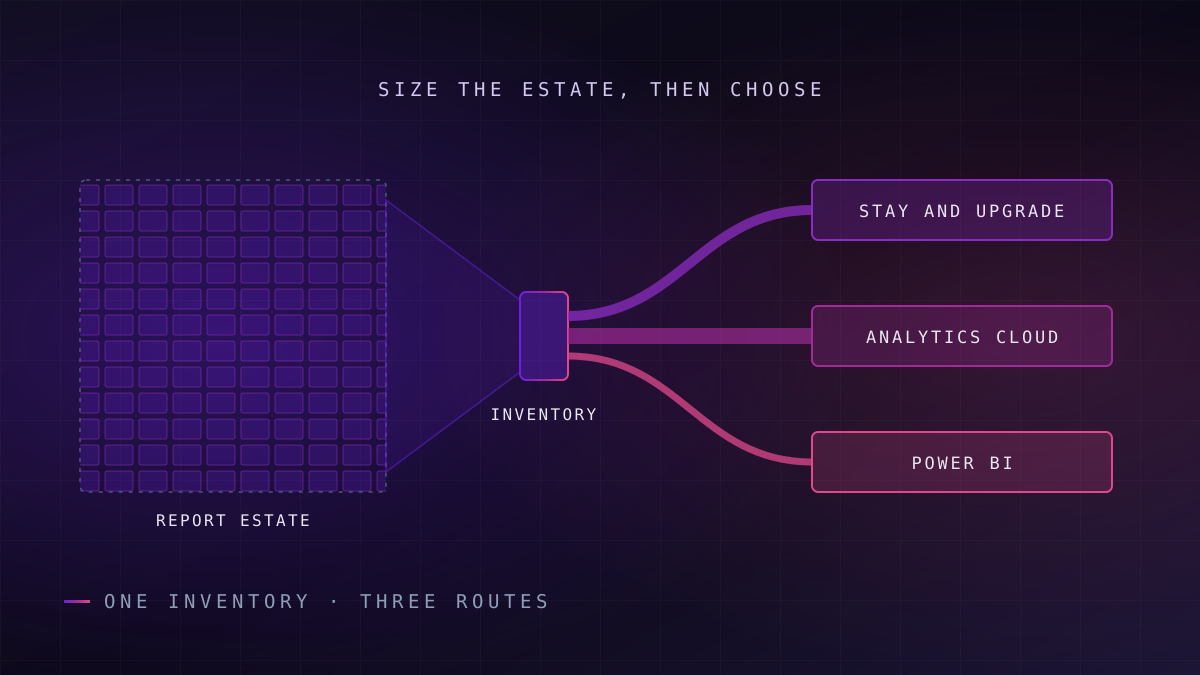
SAP BusinessObjects in the Cloud: Three Routes Before BI 4.3 Support Runs Out
SAP BusinessObjects cloud options compared: BI 2025 on-premise or private cloud, SAP Analytics Cloud, or Power BI. Size your Web Intelligence estate first.
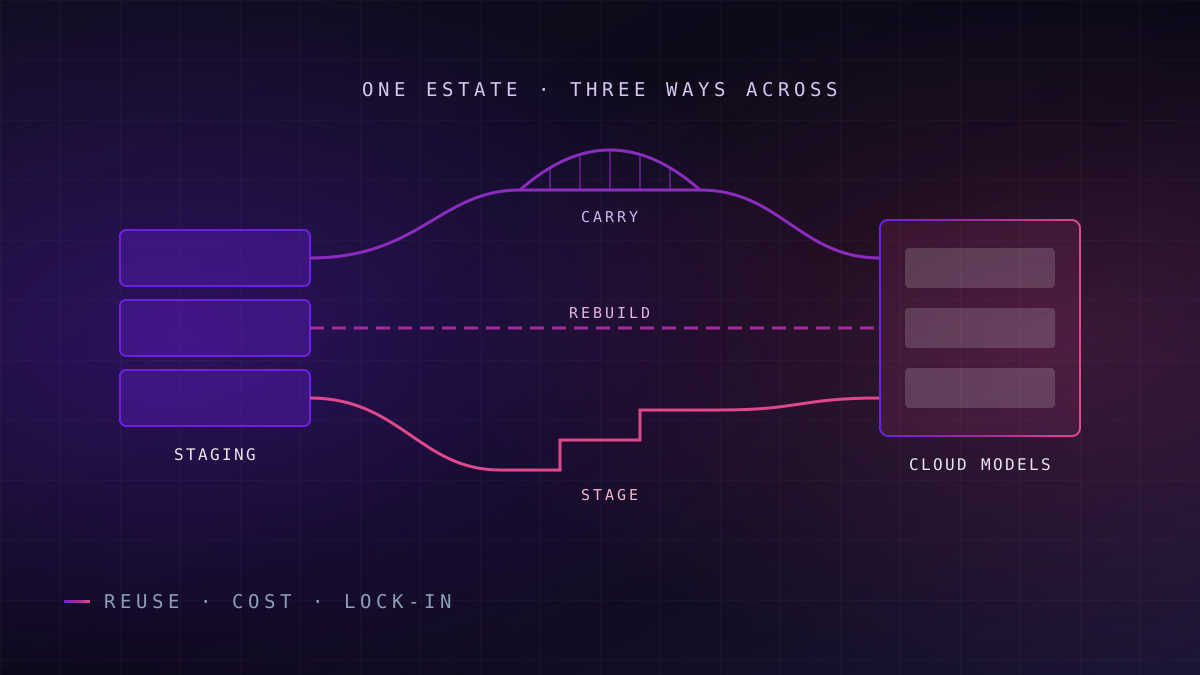
SAP BW Bridge or Full Datasphere Migration? Choosing the Route by Reuse, Cost and Lock-in
SAP BW migration has three routes: BW Bridge, a native Datasphere rebuild, or a staged hybrid. Compare reuse, cost and lock-in, then choose on evidence.
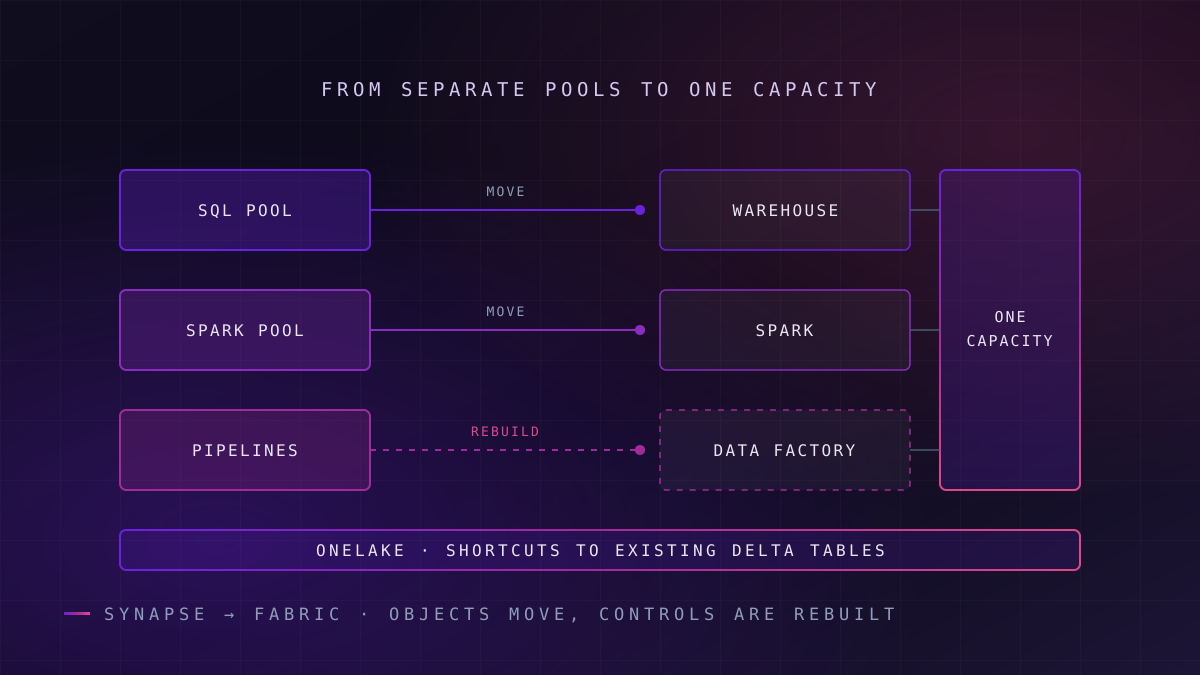
Azure Synapse to Microsoft Fabric: What Moves Cleanly, What Gets Rebuilt, and What Finance Must Decide First
Synapse to Fabric migration, component by component: what Microsoft's tools move, what you rebuild, the capacity questions to settle, and when to wait.
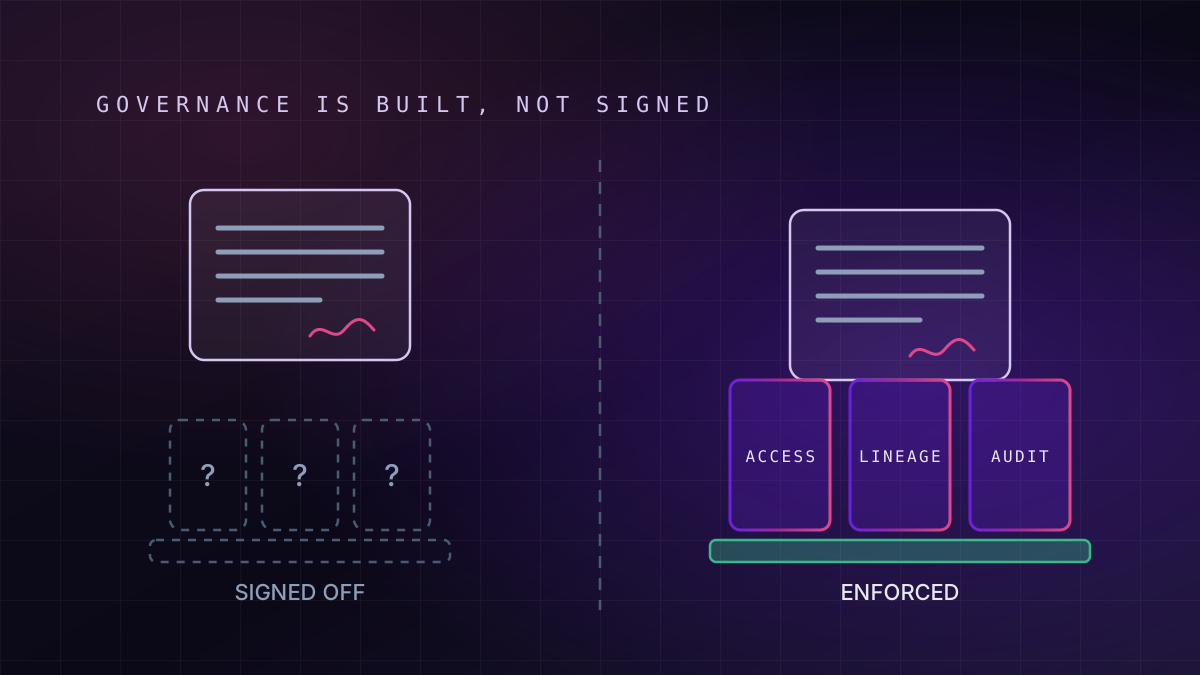
Why AI Governance Is an Engineering Problem, Not a Legal One
AI governance holds or fails in the data platform, not the policy. What engineering-first governance looks like, and three tests to run before sign-off.
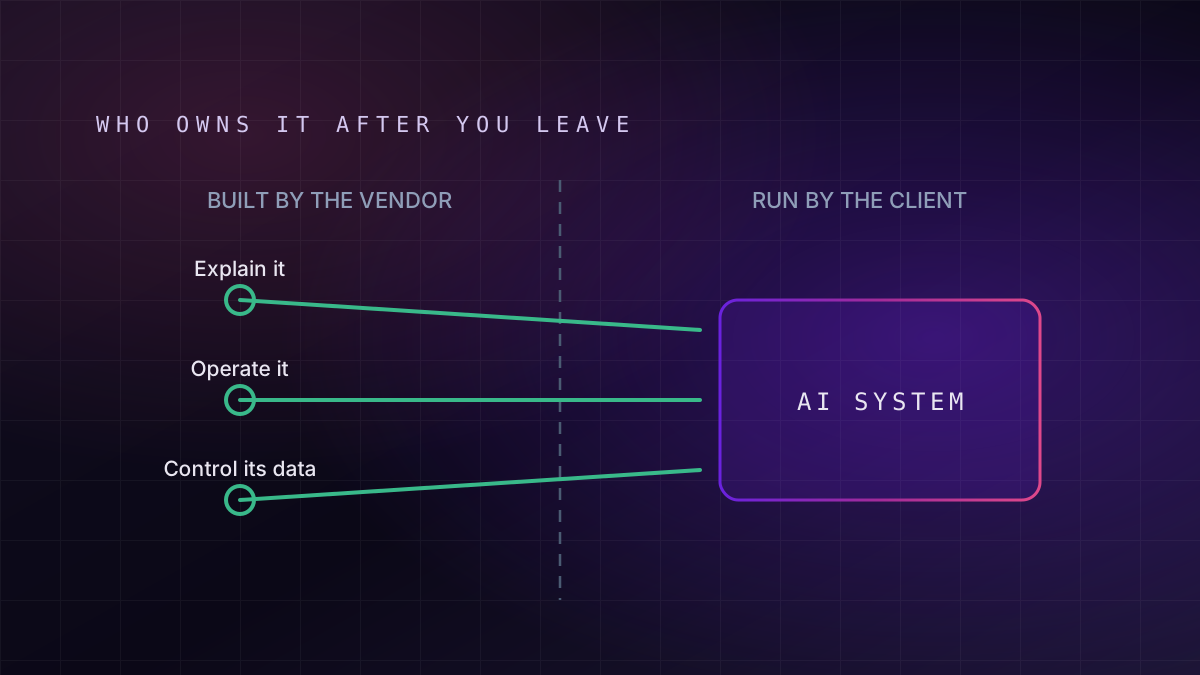
AI Ethics Isn't a Policy Document. It's Whether the Client Still Owns Their System When You Leave.
AI ethics is decided less by charters than by control. Three plain questions show whether a client still owns the AI system once the vendor leaves.
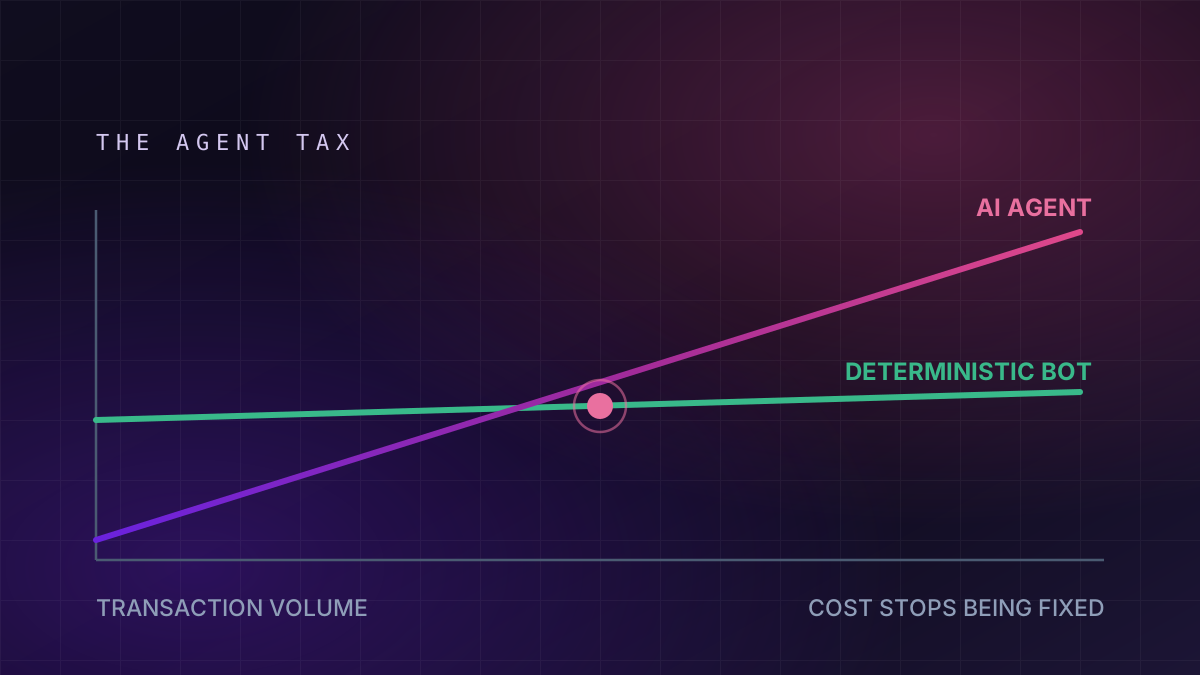
The Agent Tax: Why Replacing Your RPA Bots with AI Agents Could Blow Up Your Automation Budget
Swapping RPA bots for AI agents turns a fixed automation cost into one that scales with volume. The four cost lines most business cases leave out.
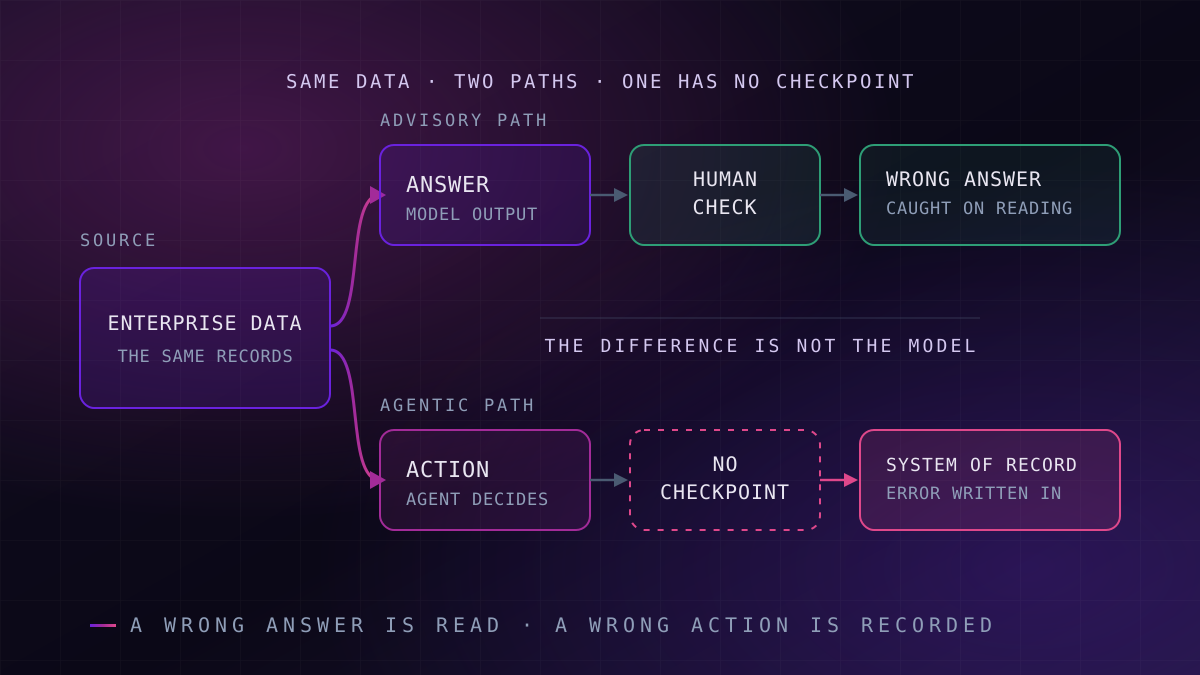
Agentic AI Is the Easy Part. Trusting It to Act Is the Hard Part.
Agentic AI capability is now commodity. The authority to act is not. What a named owner signs for before an agent commits the organisation to something.
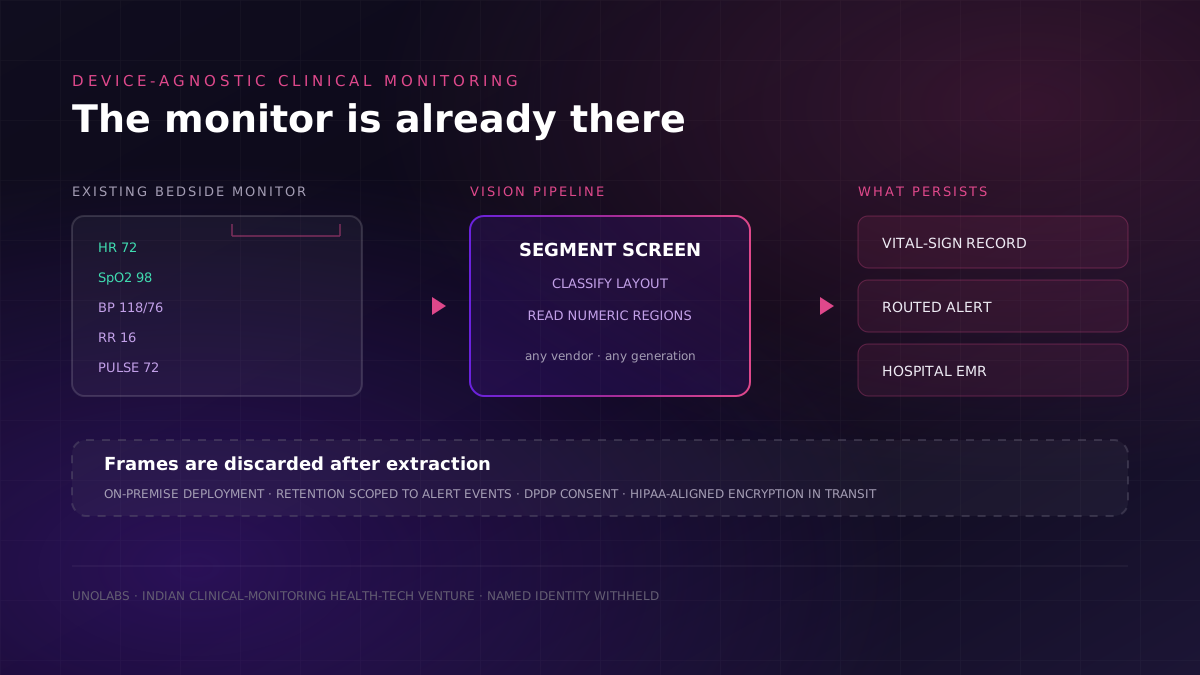
An Indian clinical-monitoring health-tech venture: reading vitals from the monitors hospitals already own
Unolabs engineered a device-agnostic patient-monitoring platform that extracts vital signs from existing bedside monitors using computer vision — no proprietary sensors, no wearables, and no patient imagery retained.
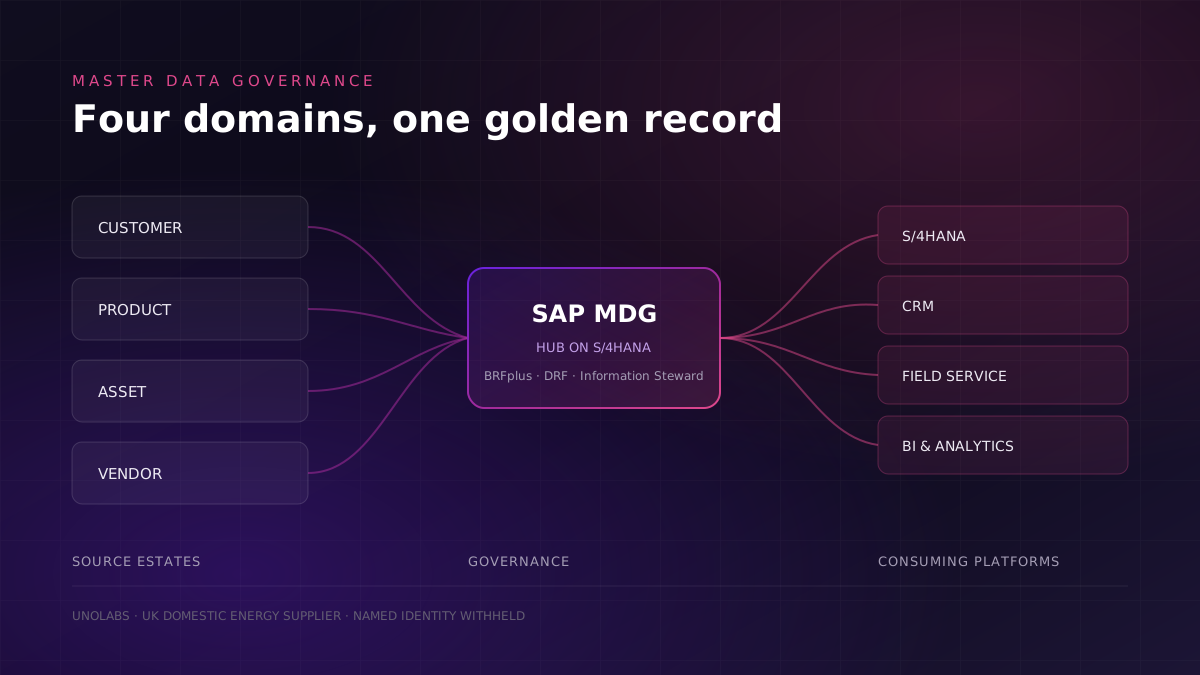
A UK domestic energy supplier: four governed master data domains behind an S/4HANA transformation
Unolabs designed and implemented SAP Master Data Governance across customer, product, asset and vendor as the golden-record layer for a UK domestic energy supplier's S/4HANA programme.
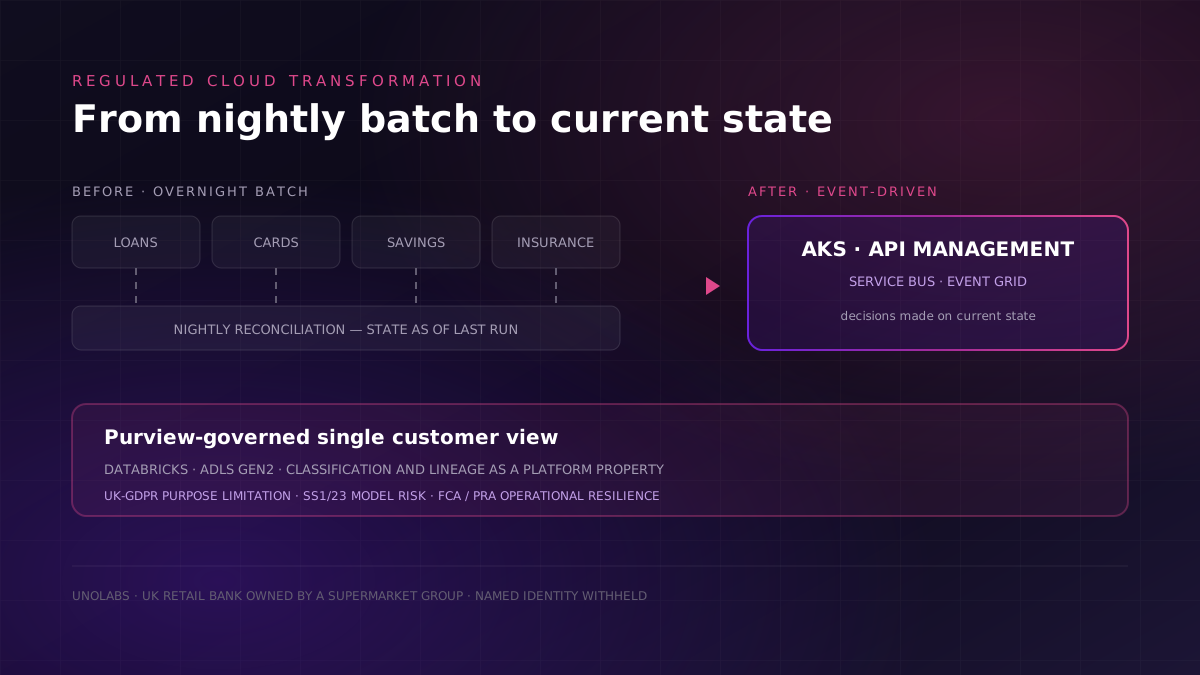
A UK retail bank owned by a supermarket group: re-platforming regulated journeys onto governed Azure
Unolabs delivered an FCA-aligned Azure landing zone, event-driven integration replacing overnight batch, and a Purview-governed single customer view for a UK retail bank.
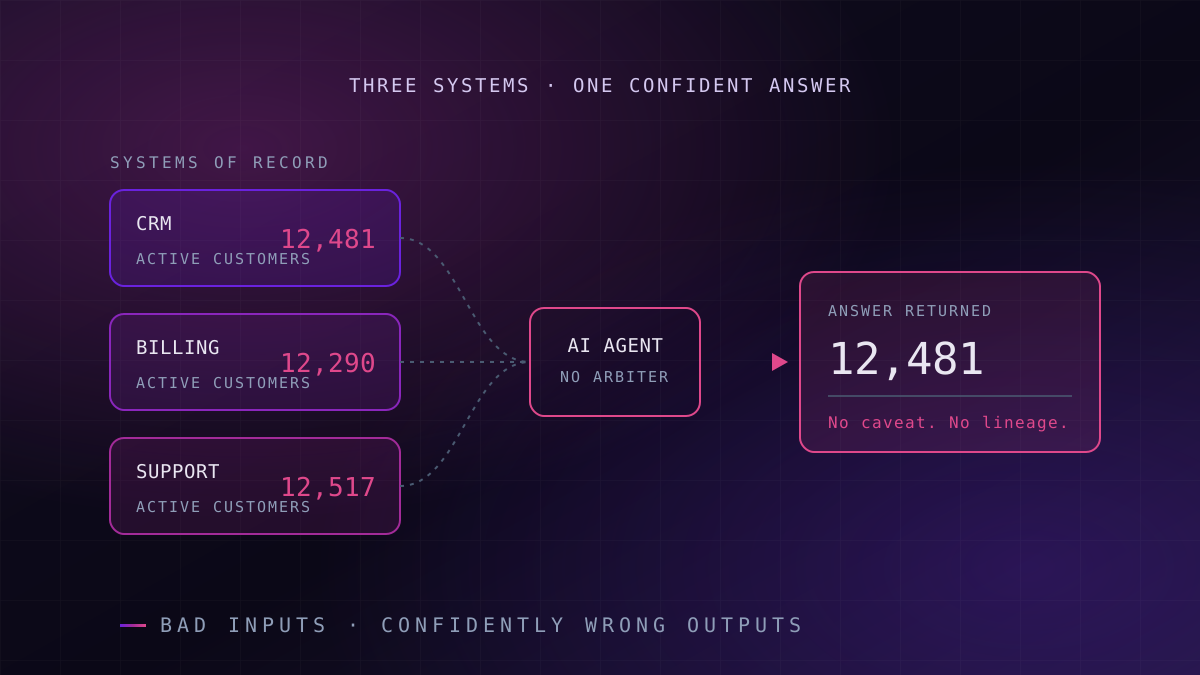
The AI Problem Nobody Talks About: It's the Data, Not the Model
Enterprise AI fails on ungoverned data, not model choice. How to sequence the data foundation before the AI layer, and three cases where you should not.
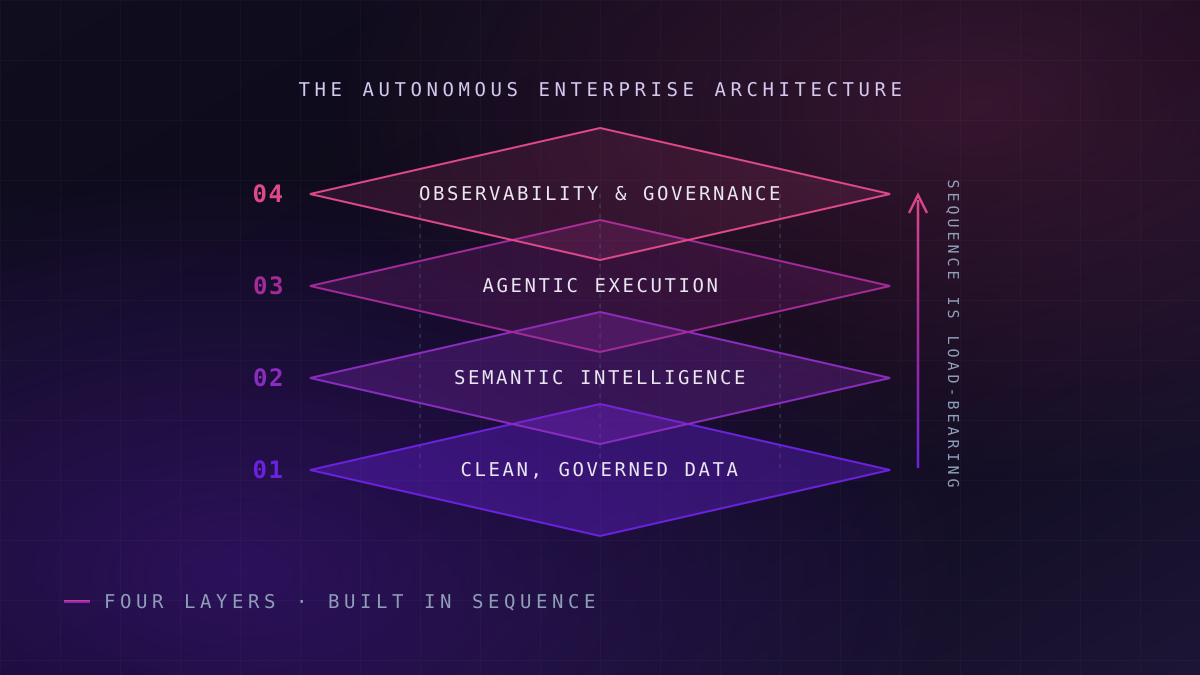
The Autonomous Enterprise Architecture: Four Layers, and Why AI Programmes Stall Without Them
Most enterprise AI programmes stall on architecture, not models. The four layers of autonomous enterprise architecture, and why sequence decides results.
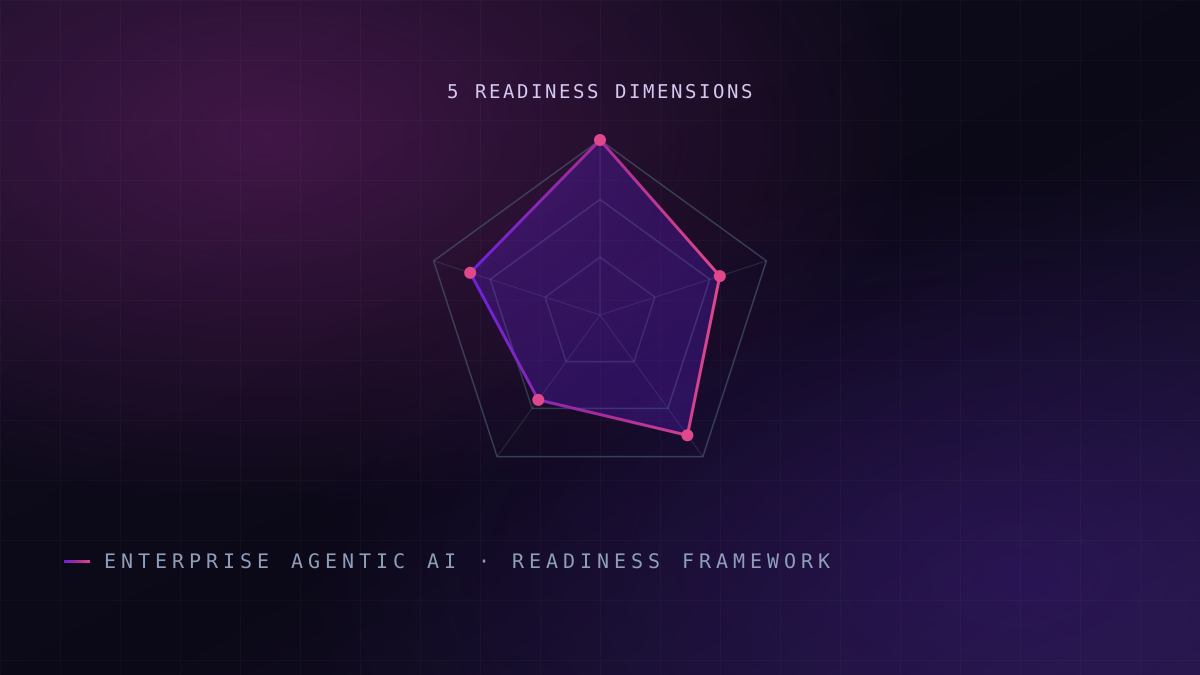
An Enterprise Readiness Framework for Agentic AI Systems
Score agentic AI readiness across five dimensions — data, tooling, guardrails, evaluation, and operating model — before you commit to an agent build.
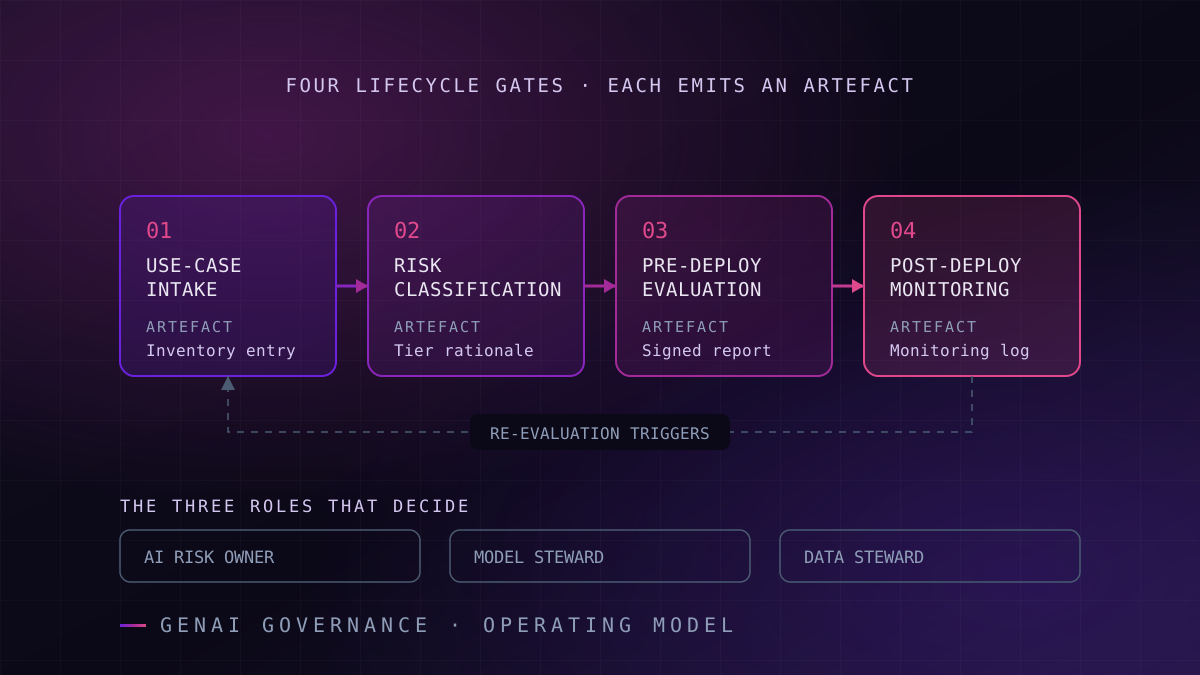
The EU AI Act and Your GenAI Operating Model: A Compliance-Ready Blueprint
What the EU AI Act asks of GenAI deployers, and the operating model that satisfies it: named roles, four lifecycle gates, and evidence at each step.
Microsoft Fabric vs Databricks: An Architect's Decision Framework
A vendor-neutral framework for Microsoft Fabric vs Databricks: capacity and DBU economics, Purview and Unity Catalog, interop, and when to run both.
S/4HANA by 2027: Protecting the Analytics Estate During Conversion
An ECC to S/4HANA conversion changes the tables, extractors, and embedded analytics your reporting depends on. Here is the continuity playbook.
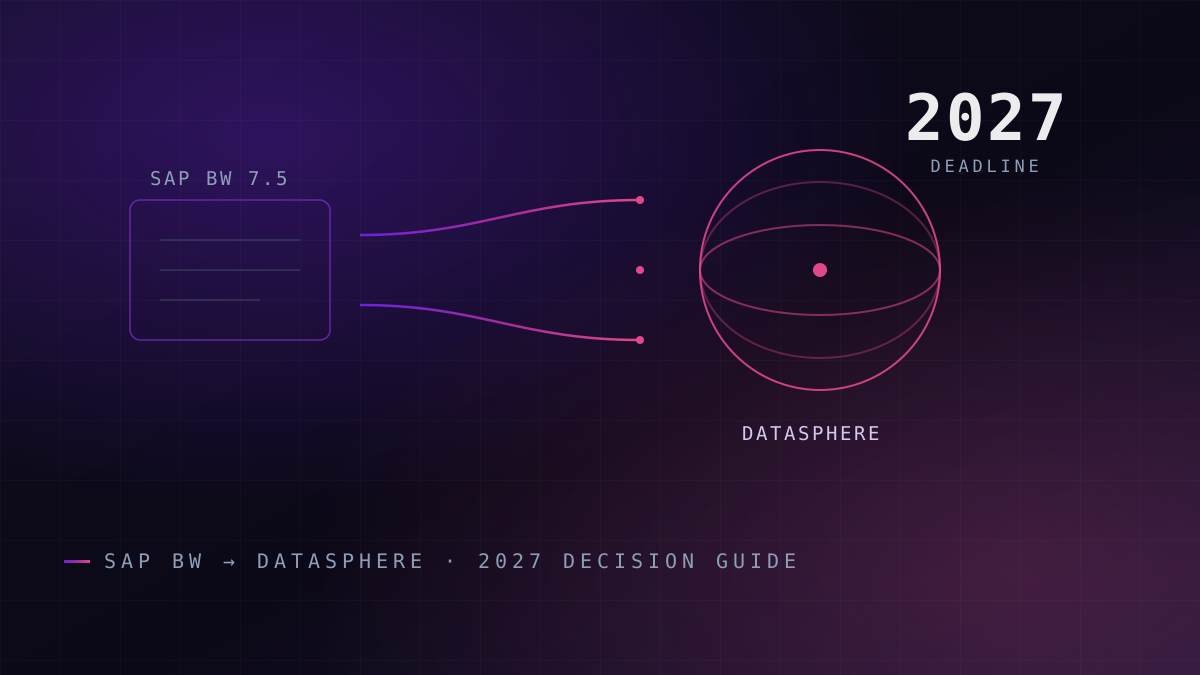
SAP BW to Datasphere Migration: The 2027 Decision Guide
SAP BW 7.5 mainstream maintenance ends 31 December 2027. An honest guide to the four realistic paths and how to decide between them.

Designing Production Agentic AI Systems: Architecture Patterns, Guardrails, and Evaluation
How production agentic AI is built: the agent loop, typed tool contracts, guardrail config, evaluation harnesses, and the gates that grant autonomy safely.

Data Platform FinOps: Controlling Databricks, Snowflake, and AI Compute Costs
A data platform FinOps playbook: cost attribution, right-sized compute, storage tiering, query tuning, and GPU controls for Databricks and Snowflake.
Global Beverages: replacing a 70-FTE harmonisation process with a governed lakehouse
Unolabs replaced a 70-FTE manual harmonisation process for a global beverages leader with a governed AI lakehouse, validating £3.3M in savings.

Fortune-100 Retailer: engineering the data separation behind a cloud-native demerger
Unolabs engineered the sovereign cloud platform behind a Fortune-100 retail demerger, with ≈$2.5M in migration savings validated with client finance.
Global Agri-Science: consolidating four SAP ECC instances onto one HANA platform
Unolabs consolidated four SAP ECC instances into one governed HANA platform for a global agri-science enterprise, cutting onboarding effort by 40%.

LLM Orchestration: Multi-Agent Patterns for Reliable Enterprise Workflows
LLM orchestration explained: supervisor, hand-off, fan-out, pipeline and debate patterns compared, and when one model call beats a multi-agent design.
Global Beauty Leader: engineering a federated data fabric for global growth
Unolabs built a domain-aware data fabric with federated governance and an MDM hub for a global beauty leader, cutting analyst reconciliation work.

Securing Enterprise RAG: PII Masking, Token-Level Access Control, and Boundary-Aware Retrieval
How to secure enterprise RAG: PII masking, chunk-level access control, boundary-aware retrieval, and audit trails regulators can follow.
Global Automotive Leader: a multi-domain platform for connected vehicle data
Unolabs unified telematics, CRM and sales signals for a global automotive leader into one governed multi-domain platform with auditable lineage.
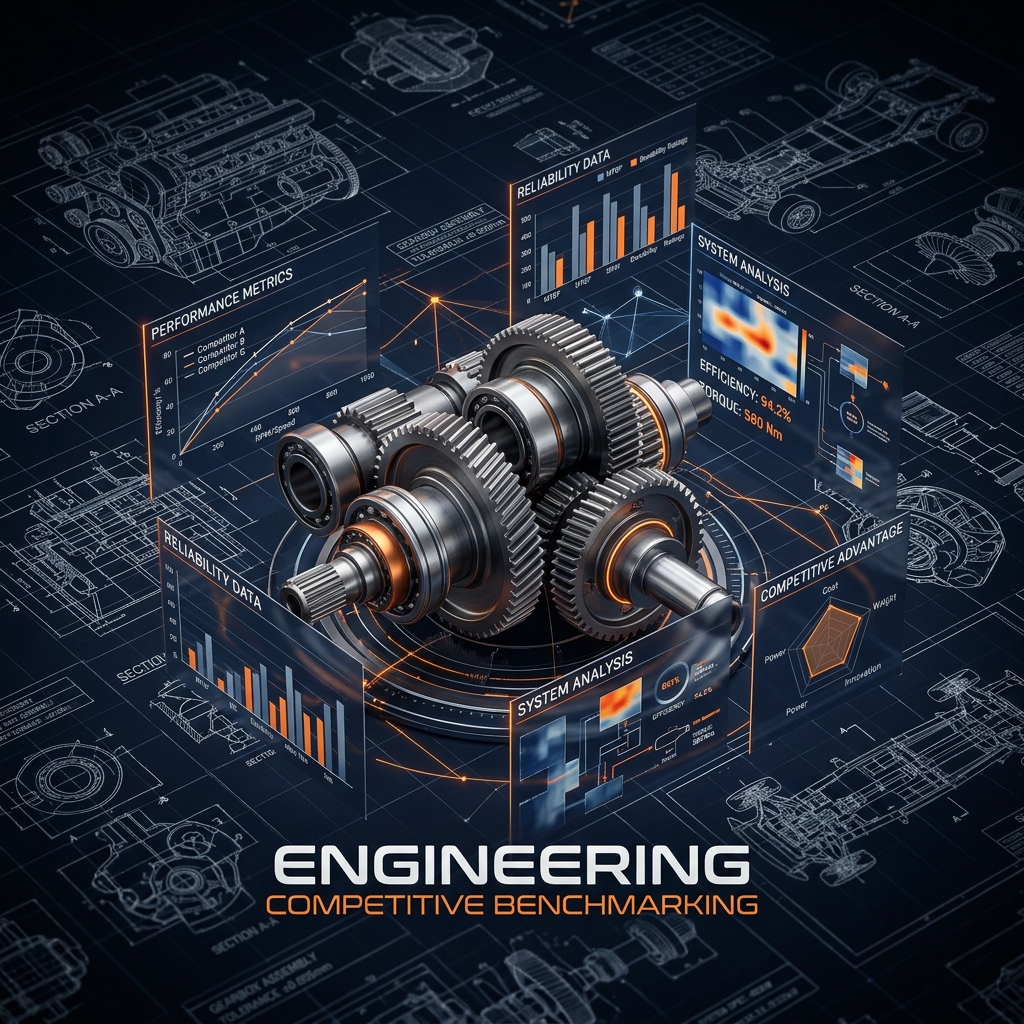
Industrial Engineering: benchmarking a product portfolio with explainable AI
An industrial engineering firm gained feature-level competitive priorities from an explainable benchmark of product, pricing and sentiment data.

Lakehouse Performance Tuning: Optimising Multi-Petabyte Databricks Environments
Beyond Z-Order and Liquid Clustering: how to tune a multi-petabyte Databricks lakehouse in the order that pays — layout, then skipping, then compute.
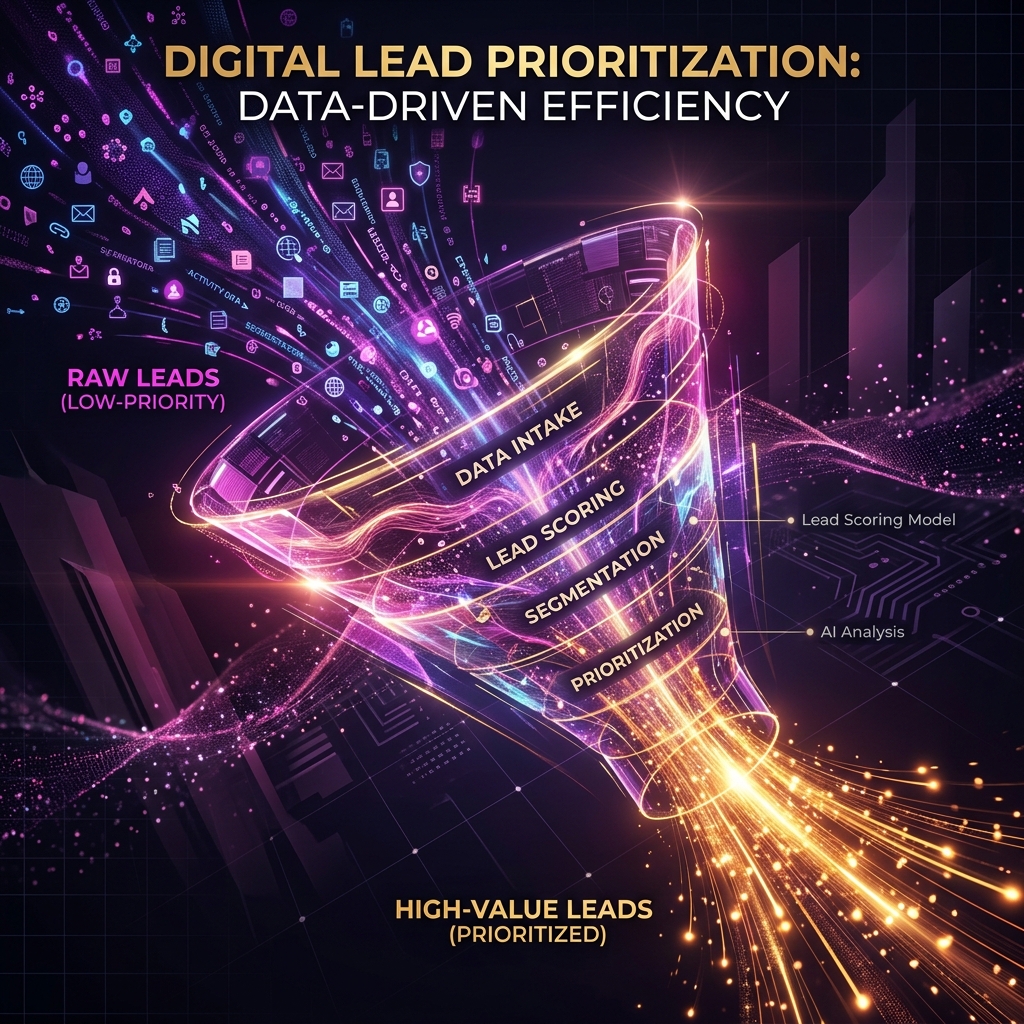
Large Automotive Organisation: explainable lead scoring for offline conversion
A large automotive organisation replaced intuition-led lead selection with explainable account scoring and a continuous sales feedback loop.

Kafka-to-Lakehouse Streaming Patterns for Global Scale
Implementation patterns for Kafka-to-lakehouse pipelines: exactly-once ingestion, schema evolution, stream processing, and millisecond serving.

Data Mesh vs. Fabric: Selecting the Right Architecture for 2026
Data mesh versus data fabric across ten dimensions: what each one fixes, how each one fails, and a decision framework for choosing or combining them.
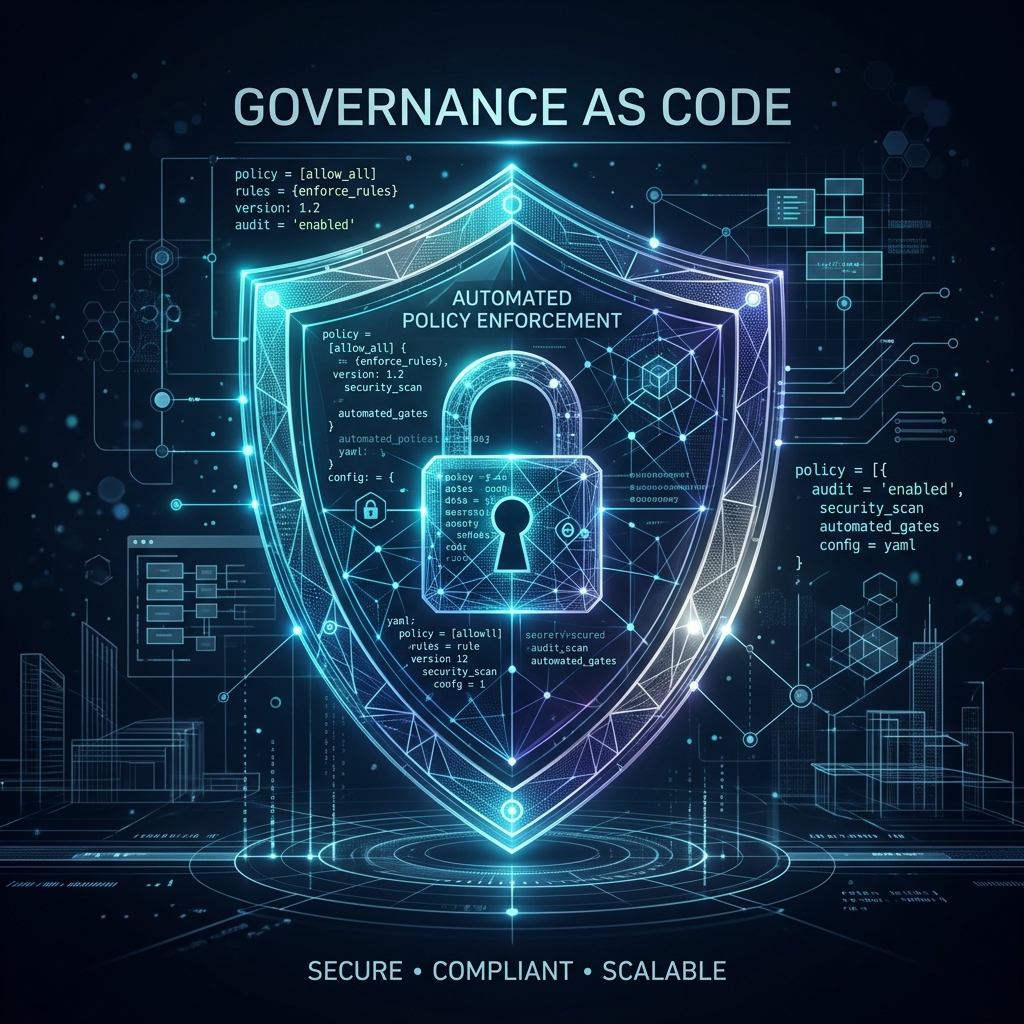
Governance as Code: Automating Data Quality in the Cloud
Turn data quality rules, access policies, and data contracts into version-controlled artefacts that CI/CD enforces before bad data reaches consumers.
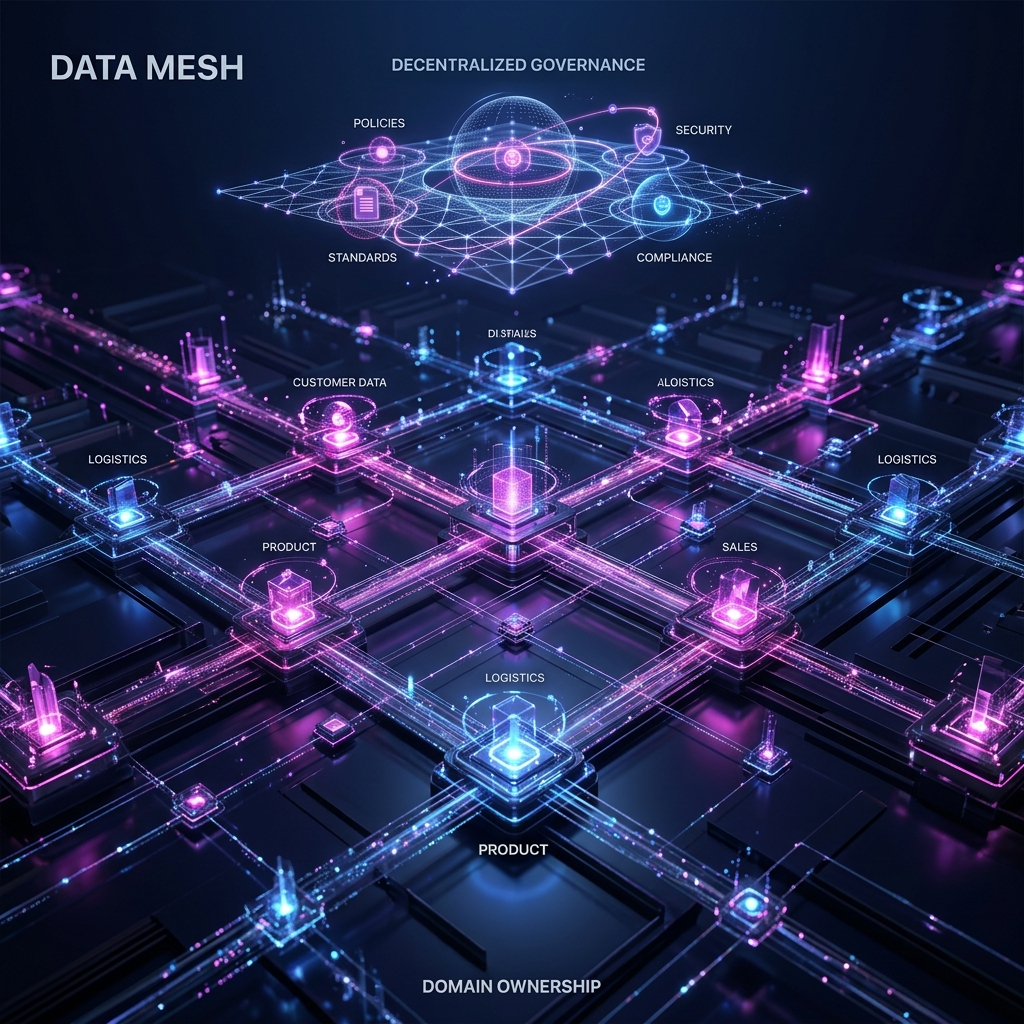
Federated Governance for Data Mesh: Ownership Without Anarchy
Federated governance for data mesh: how domain ownership, global policy standards and computational governance scale without a central bottleneck.
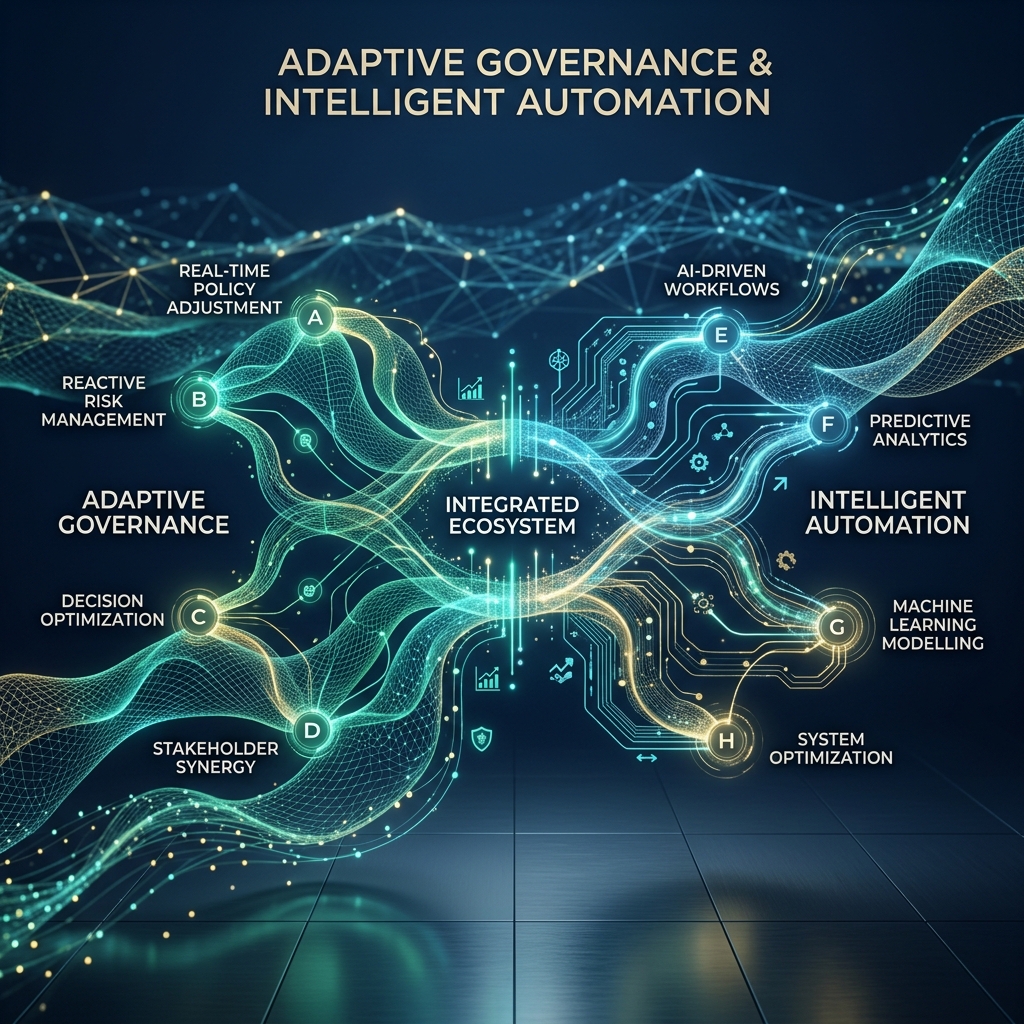
Adaptive Data Governance: Policy Automation That Keeps Pace With Change
Adaptive data governance in practice: automated policy enforcement, ML-driven data classification, and continuous compliance that keeps pace with change.

AI-Ready Data Foundations: The Governance Work That Comes First
AI-ready data foundations decide whether models scale: quality at source, resolved entities, lineage to prediction, and inventories a regulator can audit.

Platform Engineering and DataOps Culture: Turning Tool Sprawl into a Paved Road
How platform teams turn data tool sprawl into a self-service platform: seven pillars, six capabilities, and the operating model that makes adoption stick.

Data Observability & Quality Management
Data observability explained: five monitoring dimensions, three pipeline quality gates, a worked data contract in YAML, and a four-phase rollout plan.

Precision Carbon Intelligence for Global Enterprises
Enterprise carbon accounting as a data engineering problem: GHG Protocol scopes, CSRD and SB 253 pressure, and an audit-ready pipeline.

AI-Powered Autonomous Data Operations: What to Automate, and What to Keep Under Review
Autonomous data operations explained: six AI DataOps capabilities, five levels of autonomy, and the guardrails that decide what may run without a human.
Engineered for
Your Inbox.
Get our latest architectural deep-dives and industry insights delivered every two weeks. No fluff, just production code.